
Information produced by Spire Capital – One of our investment partners – 2025
When most investors think about building wealth, they picture the familiar world of public markets – buying shares of Apple, investing in index funds, or purchasing government bonds. But there’s an entire universe of ‘alternative’ investment opportunities that exists beyond these traditional markets: private markets.
What Are Private Markets?
Private markets represent investments in companies, assets, or debt that aren’t traded on public exchanges like the NYSE or NASDAQ. Instead of buying shares that anyone can purchase through a brokerage account, private market investments involve direct ownership stakes in private companies, real estate properties, infrastructure projects, or specialised lending arrangements.
Think of it this way: when you buy Tesla stock, you’re purchasing a tiny piece of a publicly traded company alongside millions of other shareholders. In private markets, you might instead invest in a promising electric vehicle startup that hasn’t gone public yet, or help finance a new solar farm that will generate income for decades.
The Five Main Categories
Private Equity involves buying established private companies or taking public companies private, typically with the goal of improving their operations and selling them for a profit within 3-7 years.
Venture Capital focuses on funding early-stage companies with high growth potential – think of the investors who backed Google, Facebook, or Uber before they became household names.
Private Credit encompasses lending to companies that can’t or don’t want to access traditional bank financing or public bond markets. This might include providing growth capital to mid-sized businesses or financing corporate acquisitions.
Private Real Estate goes beyond owning your home or a rental property. This includes investing in commercial properties, apartment complexes, warehouses, or real estate development projects.
Private Infrastructure involves investing in essential systems that power our economy: toll roads, airports, utilities, telecommunications networks, and renewable energy projects.
The Investment Process
Unlike buying stocks with a few clicks on your phone, private market investments follow a more deliberate process. Professional fund managers – called ‘General Partners’ or ‘GPs’ – raise money from investors like you (called ‘Limited Partners’ or ‘LPs’) to create investment funds. These funds then identify, evaluate, and invest in private opportunities.
For example, a private equity fund might raise $500 million from 100 investors, then use that capital to buy and improve five different companies over several years. As these companies grow and eventually get sold, the profits flow back to the investors.
The investment timeline is typically much longer than public markets. While you can sell a stock instantly, private market investments often require commitments of 3-10 years. This extended timeframe allows managers to implement meaningful improvements and ride out market volatility.
Your Investment Options
Historically, private markets were exclusively available to institutional investors like sovereign wealth funds (e.g. Australia’s Future Fund) pension funds and university endowments, or individuals with significant wealth. Today, access has expanded significantly:
Traditional Private Funds still require substantial minimum investments, often $50,000 or more, and are limited to wholesale investors (those meeting specific income or net worth requirements).
Managed Funds and ETFs now offer exposure to private market strategies with much lower minimums, though they provide indirect access rather than direct ownership.
Semi-liquid Funds offer another route, combining professional management with more accessible investment minimums.
Private Real Estate Investment Trusts (REITs) allow participation in commercial real estate projects without the hassles of direct property ownership.
At Integro, we favour a combination of semi-liquid funds and traditional private funds for eligible clients. These opportunities are always backed by deep research and assessed by the Integro investment committee before making available to clients.
Key Benefits to Consider
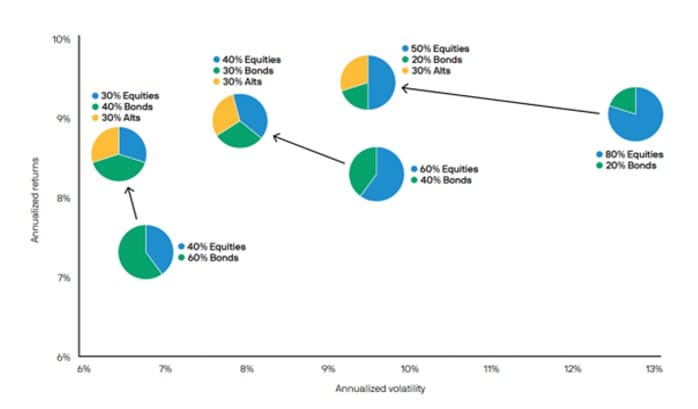
Private markets offer several compelling advantages. Diversification is perhaps most important – these investments often move independently of stock and bond markets, potentially reducing overall portfolio volatility.
Return potential has historically been attractive, with many private market categories delivering returns above those of public markets over long time periods. This premium compensates investors for accepting less liquidity and taking on additional risks.
Inflation protection comes naturally to many private market investments. Real estate rents can increase with inflation, infrastructure projects often have built-in price escalators, and private companies can more quickly adjust their pricing strategies.
Finally, private markets offer access to exclusive opportunities unavailable in public markets – from investing in the next generation of innovative companies to owning essential infrastructure that generates steady income for decades.
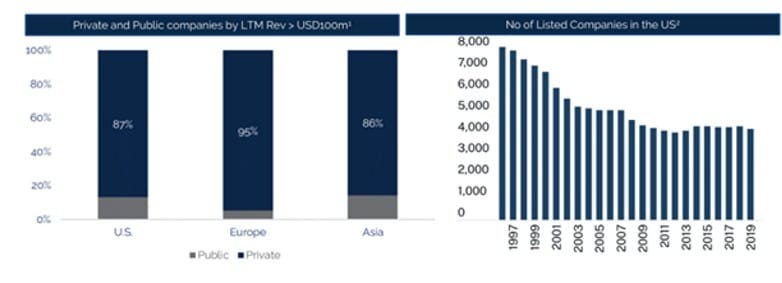
Did you know that 87% of US companies with more than USD100m in annual revenue are privately owned? And the number of listed companies in the US has almost halved over the past 30 years.
What This Means for You
Private markets aren’t right for every investor or every situation, but they represent an important tool for building long-term wealth. As we’ll explore in our next article, understanding the risks and considerations is just as important as appreciating the opportunities.
The key is approaching private markets as a complement to, not a replacement for, your traditional investments. They’re best suited for long-term goals where you can afford to tie up capital for several years in exchange for potentially higher returns and better diversification.
This material has been produced by Spire Capital, one of our investment partners who play a key role in our asset allocation strategies for clients.
If you are interested to learn more about how you can incorporate private assets within your portfolio, please talk to your Integro adviser. If you are not an existing client, get in touch via email at: [email protected]